

In Web3, growth isn’t just about acquiring users — it’s about orchestrating their entire journey.
From the first interaction to long-term loyalty, every project passes through distinct phases that require different engagement strategies, incentive systems, and measurement frameworks.
To help projects navigate this journey, TaskOn introduces a Lifecycle Operations Model — a five-stage roadmap that aligns campaign design, user motivation, and product data across every phase of your community’s evolution.
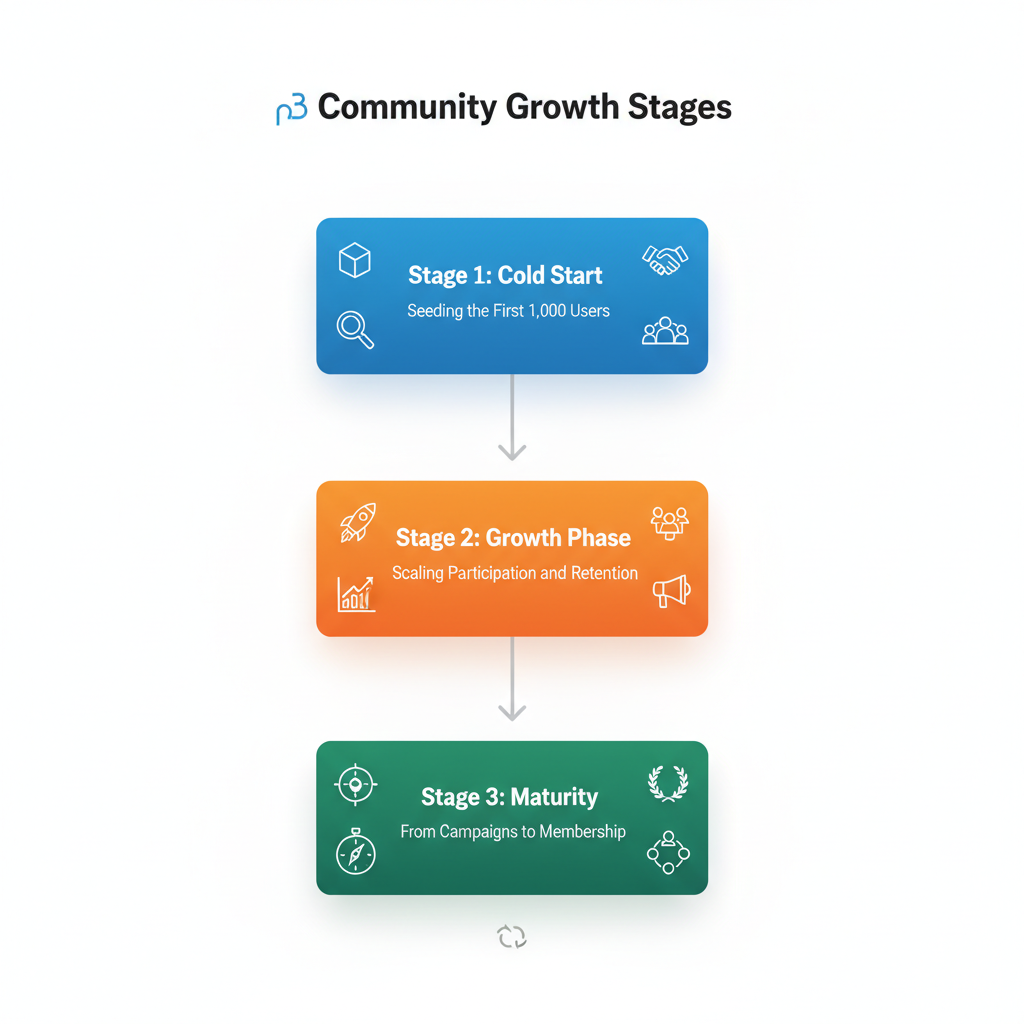
🧊 Stage 1: Cold Start — Seeding the First 1,000 Users
When a project is new, visibility is low and momentum hasn’t yet formed. The goal here isn’t mass adoption — it’s activation.
TaskOn’s minimum viable cold start setup uses:
- 3 TaskChains:
A guided onboarding path (e.g., Follow → Join Discord → Complete On-Chain Task) to help users experience the core product. - First Milestone:
A “First Interaction” achievement (e.g., first swap, first NFT mint) to celebrate users’ initial success.

Together, this combination builds an early rhythm of engagement — giving new users a sense of purpose and reward from day one.
🔹 Business Goal:
Acquire and activate your first 1,000 seed users within 30 days, while collecting valuable behavior data to refine messaging and incentives.
🚀 Stage 2: Growth Phase — Scaling Participation and Retention
Once the foundation is set, the next challenge is sustained engagement.
At this stage, it’s not about how many join, but how many stay.
Two of TaskOn’s most powerful tools — DayChain and Points System (Shop) — work together to drive consistent participation and healthy economy cycles.
- DayChain:
Establishes daily rhythm through streak-based or time-locked challenges, encouraging users to return each day for new content and rewards. - Points + Shop:
Users earn points from daily or weekly tasks, and redeem them for rewards.
This creates a reciprocal flow — earn → spend → earn again — preventing point inflation while sustaining motivation.
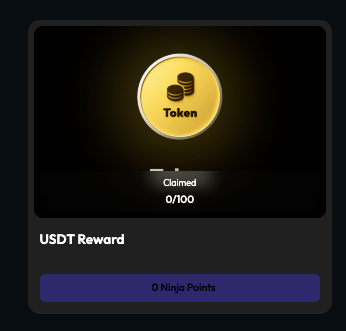
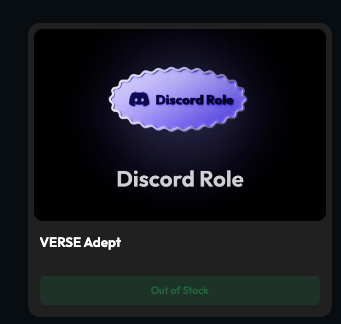
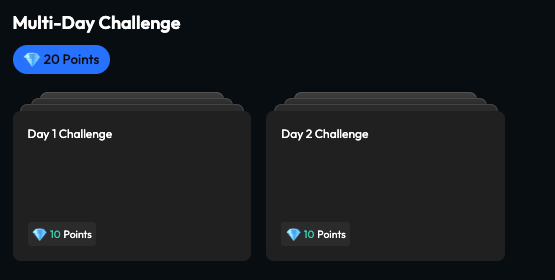
Projects that implemented this model have seen 10× user growth by turning sporadic campaigns into consistent, gamified engagement loops.
🔹 Business Goal:
Transform DAU spikes into steady retention by balancing habit formation (DayChain) with controlled incentive recycling (Shop).
🧭 Stage 3: Maturity — From Campaigns to Membership
At maturity, your community has reached scale — now the goal is depth.
This phase focuses on LTV (lifetime value) and user segmentation.
TaskOn enables projects to evolve from “open tasks” to membership-driven engagement, using:
- Rank Tiers & Member Privileges:
Reward loyal contributors with bigger rewards (exchangable via Benefits Shop).
Higher tiers (calculated via community points) unlock exclusive missions and other benefits. - Milestone Achievements:
Define long-term contributor paths — such as “Complete 10 governance votes” or “Achieve $100K in trading volume.” - Private Campaigns:
Target specific user segments (top 5%, ambassadors, whales) for personalized experiences.
This shift builds emotional loyalty — users feel recognized, not just rewarded.
🔹 Business Goal:
Use rank-based benefits and milestone paths to increase retention, advocacy, and lifetime value (LTV) among your core audience.
🔁 Stage 4: Decline & Regrowth — Reactivating Dormant Users
Even the best communities plateau. The solution isn’t just new users — it’s reactivation.
TaskOn’s lifecycle toolkit supports full-cycle user revival campaigns, combining automation and gamified events to re-engage dormant users.
- Reactivation Campaigns:
Identify inactive users (e.g., no activity for 30 days) and invite them back with special “Comeback Quests” or bonus DayChains. - Leaderboard Reset or Season End:
Clear the leaderboard each quarter to reintroduce fair competition — motivating both old and new users to participate again. - Limited-Time Events:
Introduce seasonal challenges (e.g., anniversary events, Halloween campaigns) to create spikes of excitement and emotional re-entry.
These mechanisms help generate a second growth curve — extending the community’s lifespan without needing to rebuild from scratch.
🔹 Business Goal:
Reduce churn and activate sleeping users through time-bound recall campaigns and fresh competition cycles.
📊 Stage 5: Expert-Level Optimization — Metrics, Transitions, and Budget Rebalancing
True lifecycle mastery means knowing when to transition — and how to allocate incentives efficiently.
TaskOn’s analytics dashboard enables teams to track key metrics across every stage:
- Activation Rate (Cold Start) — % of users completing first interaction
- Retention Rate (Growth) — 7-day / 30-day returning user ratio
- Conversion Rate (Maturity) — % of users upgrading to higher ranks or LTV segments
- Reactivation Rate (Regrowth) — % of dormant users returning
Projects can then:
- Define indicator thresholds (e.g., “Start DayChain after 7-day retention > 20%”).
- Adjust budget allocation dynamically — shifting incentives from acquisition to loyalty-building once user base stabilizes.
This ensures marketing spend follows user maturity, not just growth hype.
🔹 Business Goal:
Use data-driven “gates” and flexible incentive allocation to sustain engagement efficiently across the full user lifecycle.