
In the Web3 world, the Task is practically the Genesis block of all growth actions—whether it’s content distribution, community engagement, user education, or cultivating On-Chain behavior.
But for too long, projects have been bogged down by the same pain point: complex configurations, tedious setup, massive amounts of manual verification, and a struggle to keep the “hype” rhythm flowing.
TaskOn’s Smart Task is a structural innovation born from this exact friction. It isn’t just an “automation template”; it is a bona fide Intelligent Growth Engine.
For the first time, Smart Task allows operators to achieve a “set it and forget it” workflow: the moment content drops, the task generates itself. No nudges needed—the community flywheel spins on its own.
I | “Content is the Task”: Solving Web3’s Biggest Growth Headache
Web3 project marketing is all about timeliness. A tweet, a Medium article, a YouTube video—every update represents a new move, a new version, or a fresh campaign. If the community doesn’t catch the signal immediately, you miss that golden window of exposure.
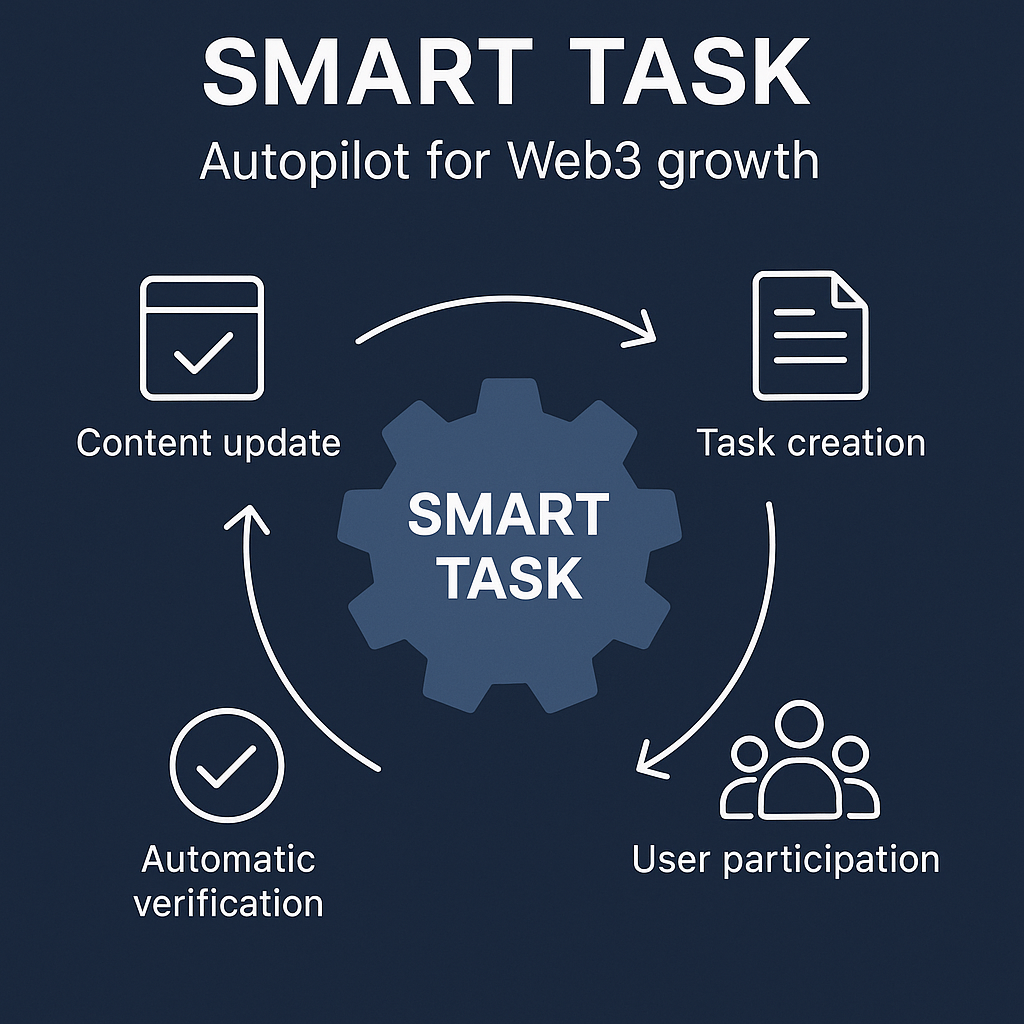
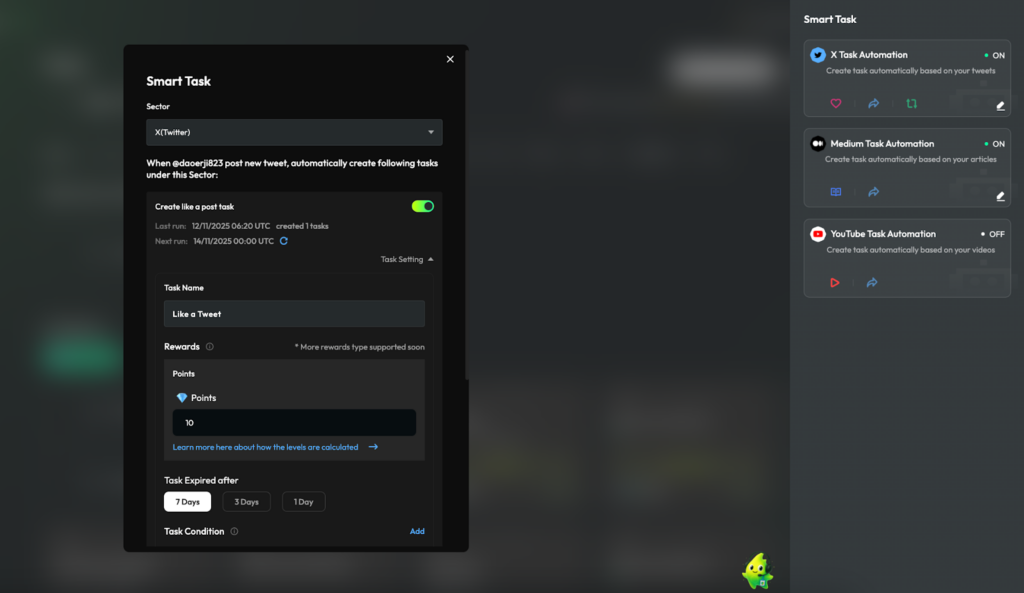
By pre-setting the Task name, rewards, and participation conditions, Smart Task automatically monitors content updates on X (Twitter), Medium, and YouTube.
The second it detects new content, it automatically creates a Task link in the community space and assigns it to the corresponding Community Task panel.
This marks the first time Web3 has realized an automated, real-time loop of Content → Task → Community Action. Smart Task is effectively Web3’s “Auto-Pilot for Growth.”
II | Auto-Verify System: From Manual Screenshots to Full Automation
Traditional Task verification is a grind. It relies on manual screenshots, text replies, and link submissions. This workflow is incredibly inefficient. On some platforms, simple Tasks clutter the screen, and verification can take half a month. The ratio of “reward vs. effort” is totally out of whack, killing user motivation.
TaskOn’s Auto-Verify system has already pioneered the automation of on-chain and off-chain tasks:
- On-Chain Tasks = Contract Event Verification
- Off-Chain Tasks = API / Behavior Scraping
- POW Content Tasks = Manual Review (The only type requiring human eyes)
With the addition of Smart Task: Content Update → Auto-Generate Task → User Completion → System Auto-Verify
The entire process requires zero manual intervention from operations staff. This means what used to be an hour of grunt work is now compressed into zero seconds.
III | The Value of Smart Task: Not Just Labor Saving, But Reconstructing Growth Rhythm
- Timeliness: An Always-On Propagation Window Content publication triggers the task instantly. The community participates in sync, never missing a beat.
- Labor Saving: Zero Repetition, Zero Copy-Pasting, Zero Config Stress No more manual task creation, filling in copy, or syncing links.
- Continuous Ops: Content Every Day, Interaction Every Day The community’s growth rhythm is maintained automatically by the system.
- Consistency: Standardized Copy, Rewards, and Format Eliminates the user experience gaps caused by manual errors.
The essence of Smart Task isn’t just about being “lazy”—it’s about shifting the community from passive operations to proactive growth.
IV | Smart Task × Points × Level × Milestone: Building a “Growth Path”
The significance of Smart Task goes beyond just “checking off a box.” It’s about converting content consumption into part of the user’s growth journey:
- User completes Smart Task → Earns Points
- Accumulates Points → Increases Level
- Reaches Threshold → Automatically Unlocks Milestone
- Ultimately → Enjoys Rewards from the Benefits Shop
This transforms “viewing content” into “participating in content,” and eventually into “investing in one’s own growth.” The user evolves from a content consumer to a task participant, and finally, to a core community contributor.
Conclusion: Smart Task is the First Stop in Web3’s Intelligent Era
In the past, operators had to manually configure every single task. From defining behaviors and writing rules to editing copy and setting reward logic—it was all manual labor.
Now, operators simply tell Smart Task: Which content sources to monitor? Which task templates to fill? Which users can participate? What are the reward and trigger logics?
The arrival of Smart Task means Web3 growth no longer relies on throwing bodies at the problem or manually pushing tasks.
The future of Web3 growth isn’t about “spamming more tasks and dumping more rewards.” It’s about letting the system understand the user better than the operator does, letting growth happen automatically.