
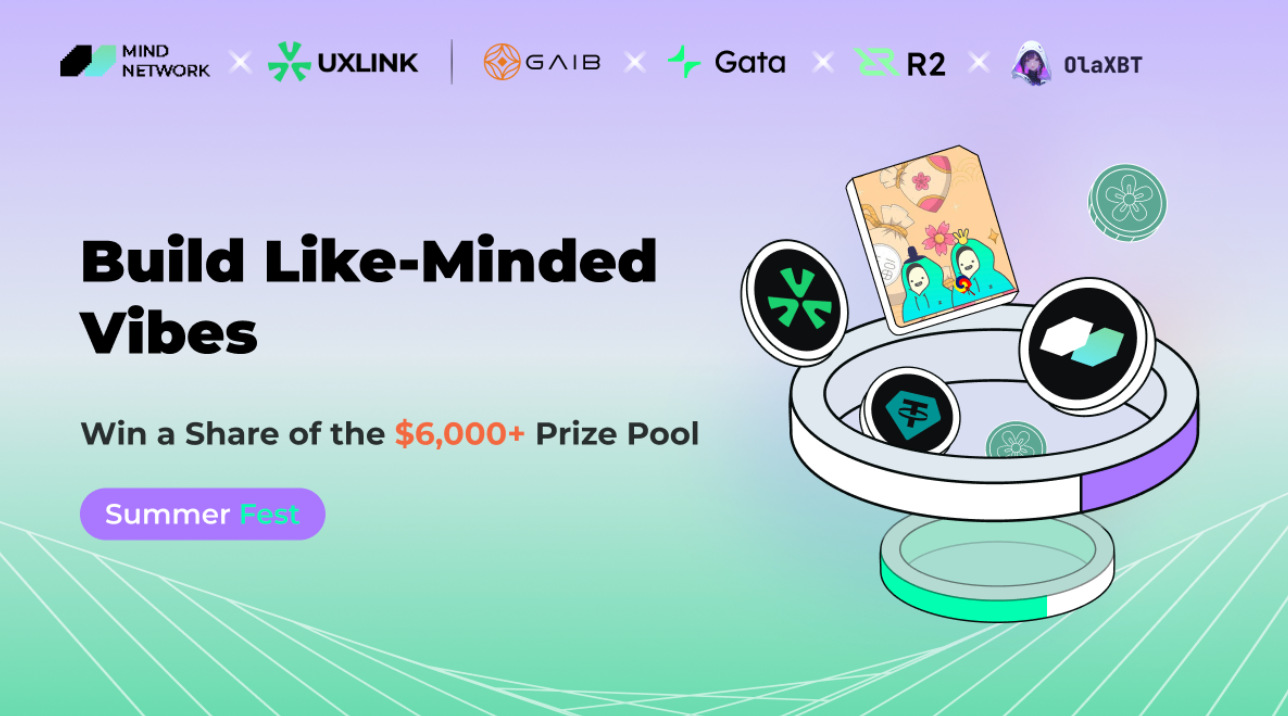
The “Build Like Minded Vibes” Summer Carnival, co-hosted by Mind Network alongside R2, UXLINK, GAIB, GATA, and olaxbt, stands as a textbook case in the Web3 marketing playbook. It demonstrates exactly how a project can proactively leverage TaskOn platform tools to achieve ecosystem scaling and growth.
By aggregating a joint prize pool of 6,000 USDT, the campaign maximized network effects, attracting over 24,000 users. It achieved a “gathering effect” and traffic fidelity far superior to a standalone Quest, all at a minimal cost.
I. Strategic Innovation: Flipping the Script from “Participant” to “Organizer”
- Breaking Traditional Limits: Old-school joint promotions usually involve Project A pinging Project B for a disjointed collab. Mind Network flipped this by leveraging the Event function, graduating from a mere Quest participant to the campaign initiator and central traffic hub.
- Owning the Narrative: Mind Network united projects—partners like R2 and UXLINK—under a single banner. By branding the campaign “Build Like Minded Vibes,” they successfully packaged diverse partner events under their own narrative, cementing their status as the core node of this ecosystem alliance.
- Building a Traffic Flywheel: Instead of waiting around for official TaskOn platform events, self-organizing allowed them to fully control the timeline, tempo, and theme. They effectively turned the TaskOn platform into Mind Network’s proprietary, on-demand joint promotion engine.
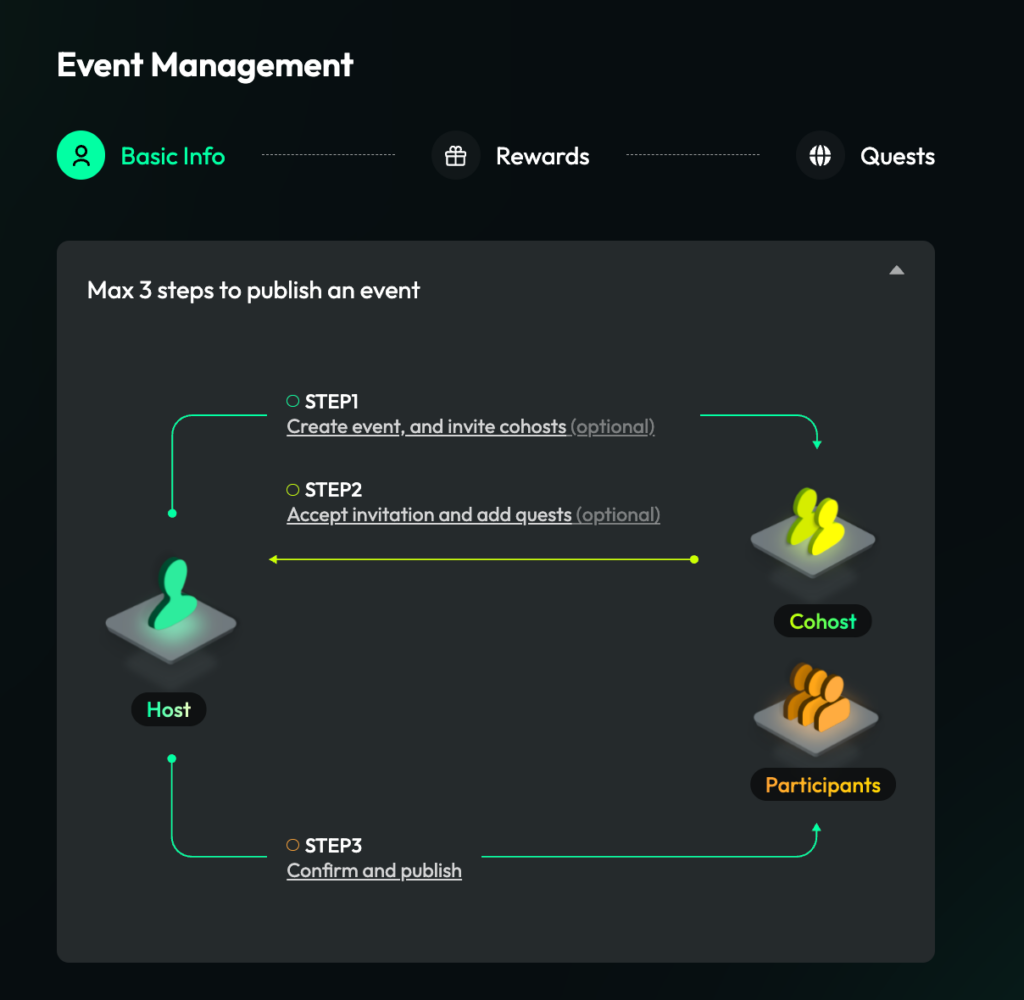
II. Tactical Execution: Maxing Out the TaskOn Event Feature
Mind Network’s win came from a degen-level understanding of the TaskOn Event module:
1. Amplifying the Centralized Traffic Effect
- The Function: On TaskOn, the Event module serves as the aggregator for traffic and discovery.
- The Play: Mind Network positioned its own homepage as the sole gateway for the Event, successfully “bundling” the community traffic of all six projects. To participate, fans from any partner project had to funnel through Mind Network’s Event page. This guaranteed Mind Network “first dibs” on capturing the inflow and the power to redistribute that traffic.
2. Cost Efficiency of the “Six-Party Reward Pool”
- The Structure: The campaign was a composite of six projects (Mind Network, R2, UXLINK, GAIB, GATA, olaxbt), each contributing their own Quest and prize pool.
- The Leverage: Mind Network achieved massive cost leverage here. By only footing the bill for their specific Quest incentives and organization, they tapped into the exposure, traffic, and community vitality of six projects combined. This compounding effect optimized the CAC (Customer Acquisition Cost) significantly.
3. Streamlining the User Journey (UX)
- In traditional joint promos, users suffer through tab-jumping hell, searching and verifying across six different project pages. The Event function vertically integrated all Quests under one master list. The UX was buttery smooth with clear directives. Crucially, the link to enter the Event was embedded below each specific Quest page, drastically boosting the conversion rate for users grinding through the tasks continuously.
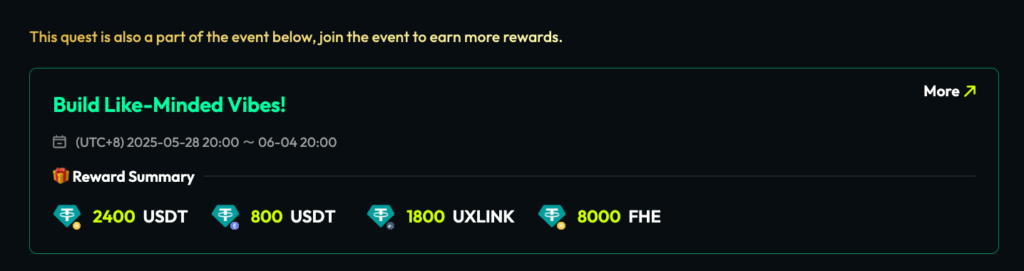
III. Ecosystem Synergy & On-Chain Value Retention
Through this self-initiated Event model, Mind Network secured high-value data sedimentation:
- Precision Profiling: They successfully captured a composite user base from five distinct verticals, including SocialFi (UXLINK) and Tech/L2 (R2/GATA). These users completed on-chain interactions with Mind Network and its partners, creating a high-fidelity whitelist for future airdrops and community governance.
- Cementing the Alliance: This wasn’t a one-off fling. By co-organizing and incentivizing together via the Event format, Mind Network deepened its strategic ties with core partners like R2 and UXLINK.
Conclusion: The Shift to Autonomous Web3 Marketing
Mind Network’s “Build Like Minded Vibes” Summer Carnival proves that smart projects are treating TaskOn tools as their personal “campaign factory.” By taking the initiative to curate and plan, projects can aggregate ecosystem resources with extreme efficiency, dominate the market narrative, and achieve sustainable, scalable user growth.
This is the alpha—a top-tier paradigm for future Web3 ecosystem builders to study and replicate.