

How TaskOn’s Points Framework Helps Projects Build a Sustainable, Data-Driven User Economy
01|Points Are the Hidden Currency of Every Ecosystem
In Web3, users don’t just join—they contribute. They trade, refer, build, and educate.
But how do you measure that contribution, reward it fairly, and turn it into lasting loyalty?
That’s where a Points System becomes the economic backbone of your project.
Points are not just rewards.
They are anchors of value, representing a user’s verified contribution and long-term engagement.
On TaskOn, Points unify every form of user interaction—on-chain or off-chain—into one measurable, redeemable, and recyclable value system.
02|The Triple Function of Points: Incentive, Measurement, Settlement
A successful Web3 Points System must deliver three essential functions:
| Function | Role in the Ecosystem |
| Incentive | Motivate participation through measurable rewards. |
| Measurement | Quantify contribution using verifiable signals from tasks or actions. |
| Settlement | Distribute, redeem, and recycle value transparently across campaigns. |
Together, these transform “one-time participation” into continuous engagement and economic circulation.
03|Designing a Healthy Points Economy
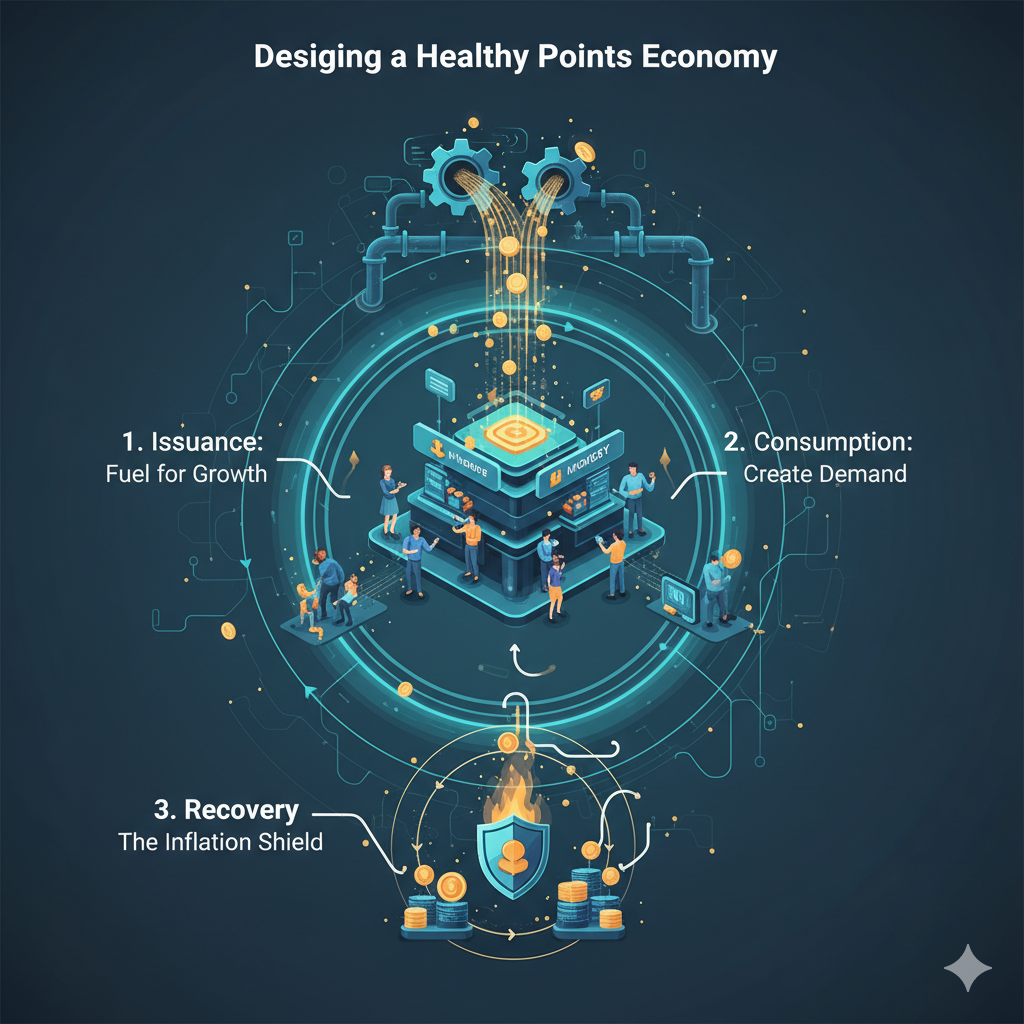
Like any economy, your Points system needs both creation and control.
A good design follows three steps: Issuance → Consumption → Recovery.
1. Issuance: Fuel for Growth
Define how users earn Points:
- Completing on-chain or off-chain tasks
- Inviting new users
- Maintaining streaks or completing chains
- Participating in verified events
Key: reward verified, high-value actions—not just clicks.
2. Consumption: Create Demand
Let users spend Points in ways that feel meaningful:
- Redeem NFTs, tokens, or merchandise in a Benefits Shop
- Use Points to unlock premium features, levels, or whitelists
- Enter lotteries, raffles, or trading competitions
When users see what their Points can unlock, they see why to keep engaging.
3. Recovery: The Inflation Shield
If Points only go out and never come back, inflation kills motivation.
Build in “sinks” that recycle supply:
- Point expiration or burn mechanisms
- Entry fees for exclusive events
- Tier upgrades that consume Points
- Dynamic pricing in the Benefits Shop
Balance issuance and recovery—this is how Points become sustainable.
04|TaskOn’s Integrated Points Framework
TaskOn’s infrastructure makes it easy for any project to launch, track, and balance a Points-based economy without writing a single line of code.
| Task Type | Point Logic | Verification |
| On-chain Tasks | Award Points per verified transaction or contract event | Smart contract event logs |
| Off-chain Tasks | Reward Points for social or educational actions | API or OAuth verification |
| Referral Tasks | Grant Points only after referee verification | Referral engine |
| Milestone / Level Tasks | Bonus Points for multi-step completions | TaskChain integration |
This flexibility lets every campaign feed into one unified Points balance, creating a cross-campaign identity system for your users.
05|The Advanced Economy: Curves, Scenarios, and Thresholds
A mature Points model evolves just like a token economy—through controlled issuance curves, diverse consumption scenarios, and recovery thresholds.
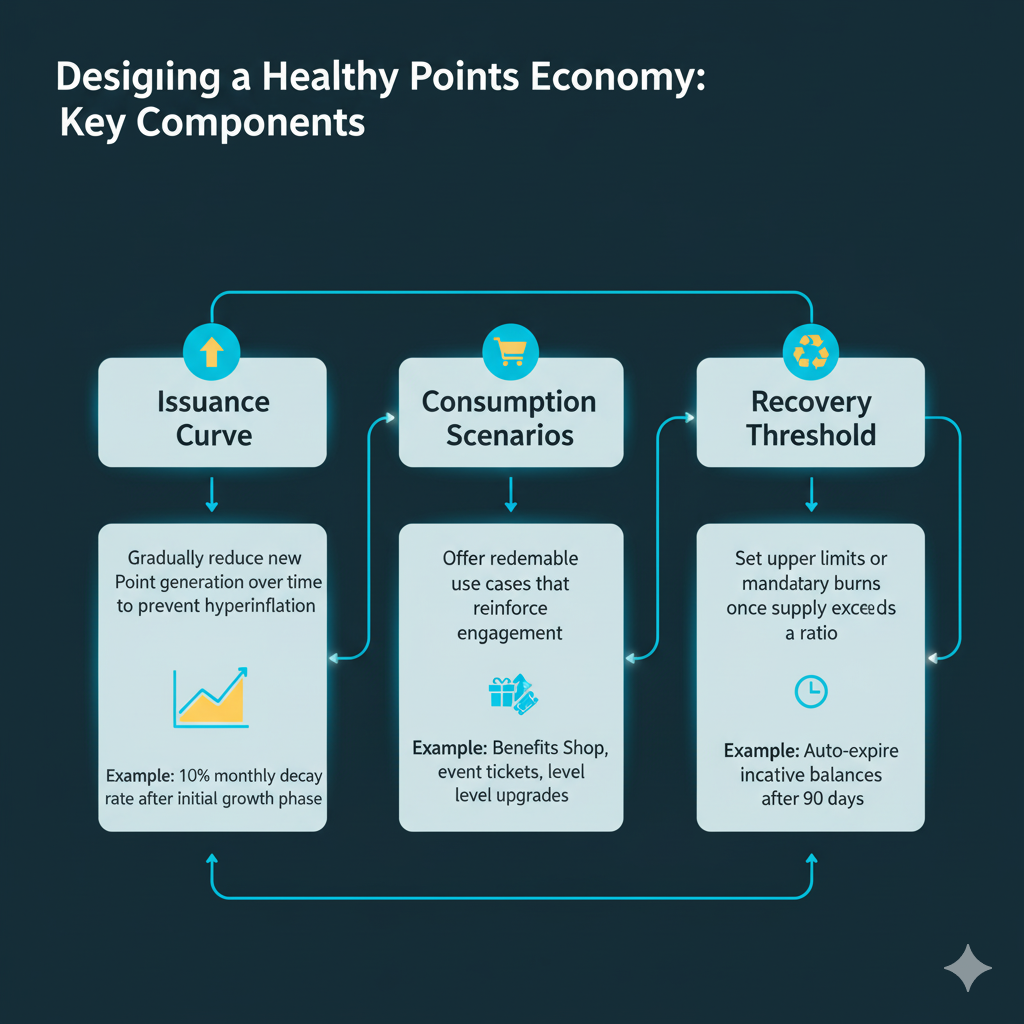
TaskOn automates these parameters, helping projects adjust supply-and-demand dynamics through simple admin tools.
06|The Hidden Trap: What Happens When You Only Mint but Never Recycle
Many Web3 projects fall into the “infinite reward” trap—issuing Points endlessly with no recovery plan.
The result: inflation, disengagement, and meaningless loyalty scores.
Common symptoms:
- Users hoard Points with no purpose.
- Early participants get over-rewarded.
- Newcomers lose interest as value erodes.
The solution is not less reward—it’s smarter recycling.
By adding consumption and burn events to the cycle, you re-create scarcity and urgency—just like real economies.
07|Why Businesses Choose TaskOn’s Points System
| Advantage | What It Means for You |
| Unified Economy Layer | Combine all campaigns under one Points standard. |
| Built-in Anti-Inflation Tools | Automated recycling and expiry systems. |
| Cross-Campaign Continuity | Users carry value from one event to the next. |
| Customizable Rules | Define issuance, reward weight, and redemption logic freely. |
| Performance Dashboard | Track Point flow, redemption rates, and ROI in real time. |
Whether you’re a DEX, GameFi studio, or community protocol, TaskOn helps you design a reward system that is measurable, controlled, and scalable.
08|TaskOn Example: Layer One X
Project: Layer One X
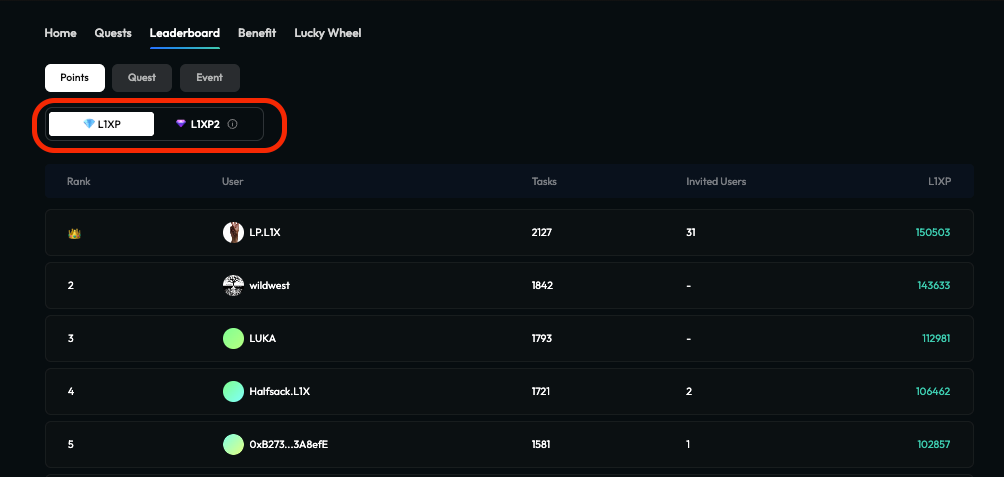
To create an efficient Points system and encourage gamification of rewards, the project has introduced different points system during multiple phases. For example, L1XP and L1XP2 represents two Airdrop seasons, each with different tasks and rewards.
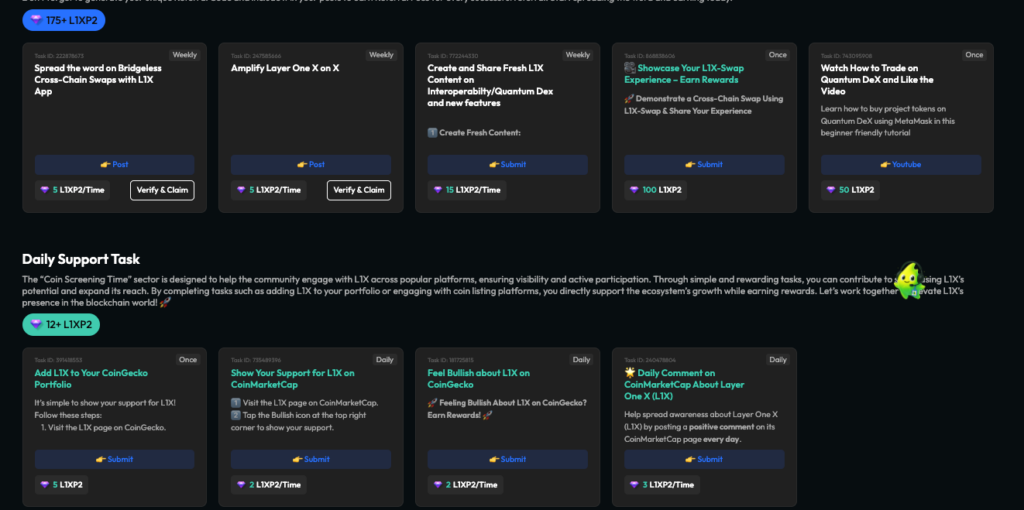
Throughout the Community page, Layer One X clearly labels the points that users can win by finishing quests.

The leaderboard shows points accumulated for both Airdrop Seasons 1 and 2, showing that the project values all participants, and are entitled to rewards.
Points are carefully crafted based on the difficulty of the tasks, allowing users to pick and choose how to earn their points.
09|The Future: Points as the Universal Growth Layer
In the next era of Web3, Points will become the universal loyalty currency—bridging apps, chains, and communities.
Projects that master this now will own their own growth engine:
- Measurable engagement
- Predictable incentive costs
- Long-term user equity
With TaskOn, you don’t just give rewards—you build an economy.
Points = Trust + Value + Identity.
10|Closing Insight
When designed correctly, a Points system isn’t a campaign gimmick—it’s a micro-economy.
It turns every user interaction into measurable value, every reward into a proof of contribution, and every campaign into an engine for retention.
In one line:
TaskOn’s Points System is the invisible layer that transforms user engagement into economic growth.